
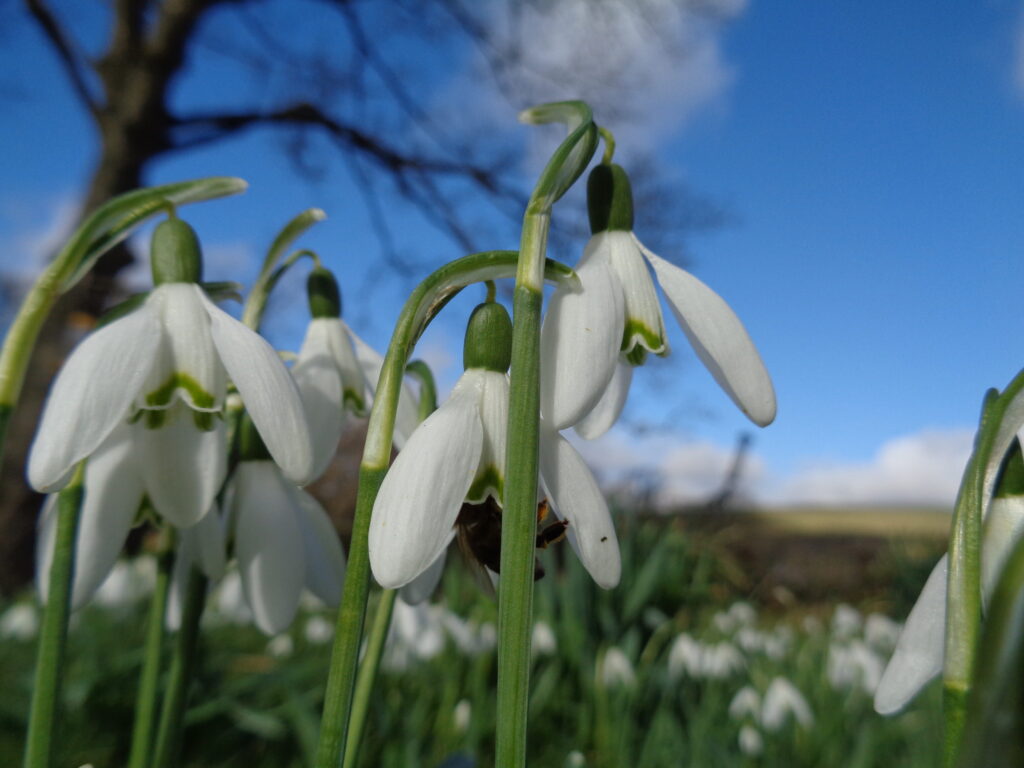
Our first wildflower for January is the snowdrop (Galanthus nivalis), a perennial non-native species first recorded wild in the UK in the 1780s. It flowers from January to March, to a height of 15-20cm. It is a delicate plant with a single white bell-shaped flower at the end of an erect flowering stem.
You will find snowdrops in damp woodland and other shady areas. It grows best in rich, moist soils and can tolerate sun, part shade or shade. Versatile in your garden, it is most suitable in flower beds, containers, hanging baskets, short flowering lawns and hedgerows.
Snowdrops propagate by bulb division only. Plant the purchased bulbs in early autumn 5cm deep and 8 cm apart. You could scatter the bulbs first to create ‘natural drift patterns’. They will take 2-3 years to establish. When the plants outgrow their space, lift the bulbs and divide and plant immediately after flowering.
Snowdrops are valuable for wildlife as they provide pollen for the earliest emerging bee species on those first warm days of the year.
Interesting facts:
- The appearance of snowdrops in your garden is the first indication that warmer weather is on the way and so are traditionally a symbol of hope.
- The generic name of ‘Galanthus’ is taken from the 2 Greek words meaning ‘milk’ and flower’.
- Temperature inside the closed flowerhead is 2 degrees warmer than air temperature and protects the pollen from frost.