
Oxeye daisy (Leucanthemum vulgare) is a nativeperennial. It flowers from late May to September, to a height of around 20 to 75 centimetres.
The oxeye daisy looks like the daisy you have in your lawn, but it is in fact the largest member of the daisy family. The flower has white petals with a golden yellow flower centre. Each large flower is actually not just one flower, but many: the yellow centre is made up of lots of small yellow flowers. Despite the small amount of nectar from each flower, the oxeye daisy is an important food source for pollinating insects including beetles, bees, and butterflies.
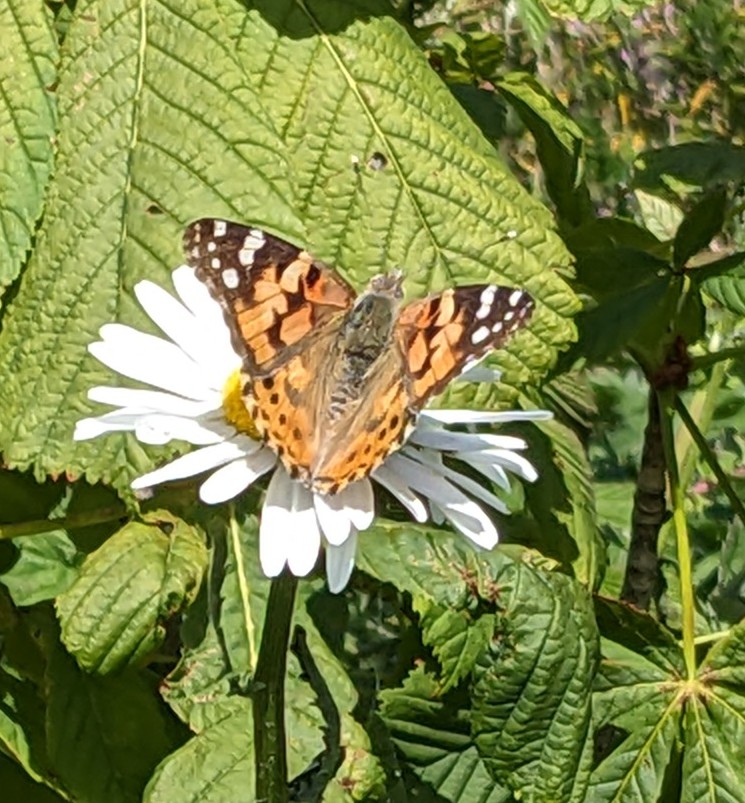
Locally you will find oxeye daises in most types of grassland habitats, waste ground, parks, verges and lawns. Oxeye daises grow best in well-drained, disturbed soils and prefer full or partial sun.
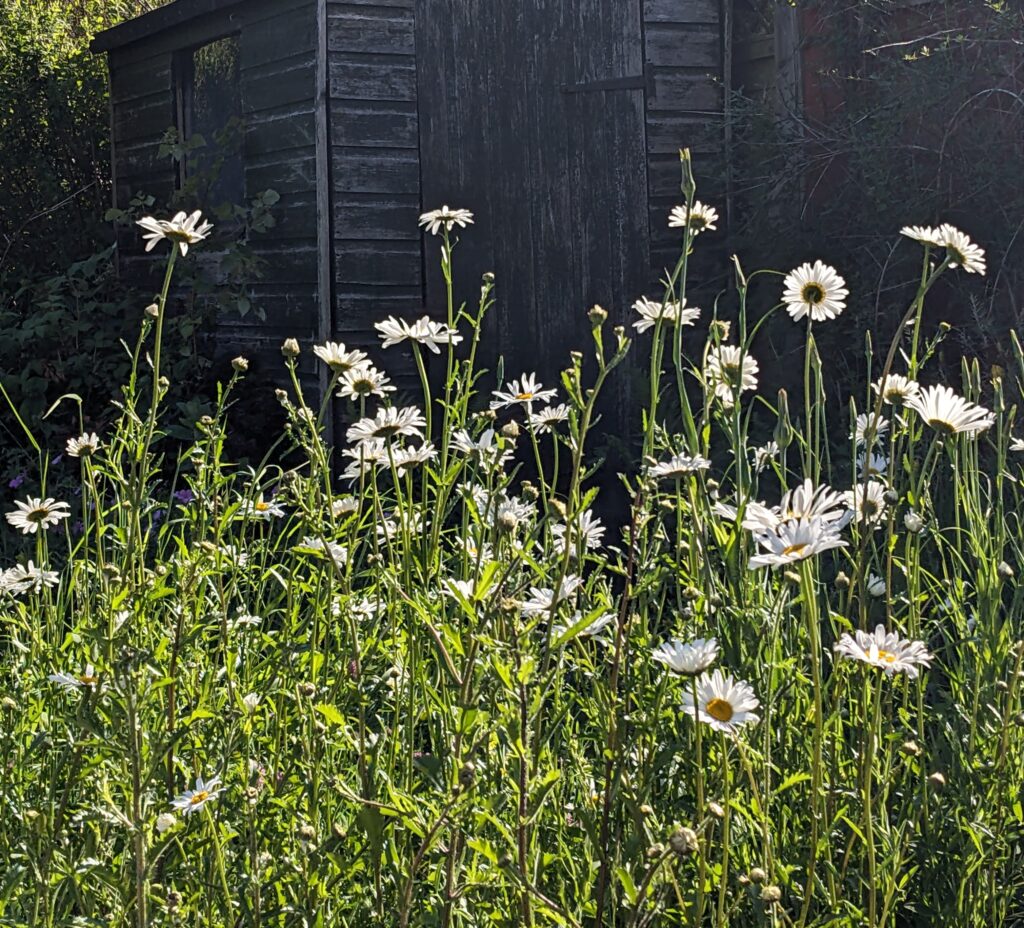
For the garden, they grow well in flower beds, containers, hanging baskets, summer meadow wild areas and under hedgerows. Oxeye daisies are perfect for planting in herbaceous borders and can quickly populate bare ground that has low fertility.
Oxeye daisies easily propagate by seed in the spring and by splitting clumps in the autumn.
Interesting facts:
- Oxeye Daisy is also known as ‘moon daisy’ and ‘moonpenny’ due to their blooms being so bright that they appear to “glow in the evening”.
- ‘Daisy’ comes from the Anglo-Saxon words ‘daeyes’ (day’s) and ‘eages’ (eye)
- In Austria and Germany, the oxeye daisy was hung inside the house as it was believed it would repel lightening.
More detail on how you can grow meadowsweet can be found on our Wildflowers for Sale page.