
Despite winter’s continuing presence in February, your garden, patio or window box is still part of a vast living landscape. It is a ‘green corridor’ in a wider network of nature reserves and the whole countryside.
If you want to be involved in your garden:
- Continue feeding birds, who will welcome a helping hand. A morning chorus of blackbirds, robins and sparrows signals preparations for the breeding season and February is the month to put up new nesting boxes or clean and repair existing ones.
- This is the last month for lifting and moving trees and shrubs. If the ground is frozen then leave them in place until autumn.
- Lift and divide established border perennials (plants that live longer than two years) to make new plants. Greater knapweed, sedum (Autumn Joy/Ice Plant), oxeye daises and yarrow are all fantastic wildflowers that can be divided and replanted to attract more butterflies and bees.
- Trim back border perennials to allow room for this year’s growth. Remove the cuttings to a compost heap.
- Order wildflower seeds now from wildflower specialists (Emorsgate, Habitat Aid and Cumbria Wildflowers all recommended) to grow species that suit your green space.
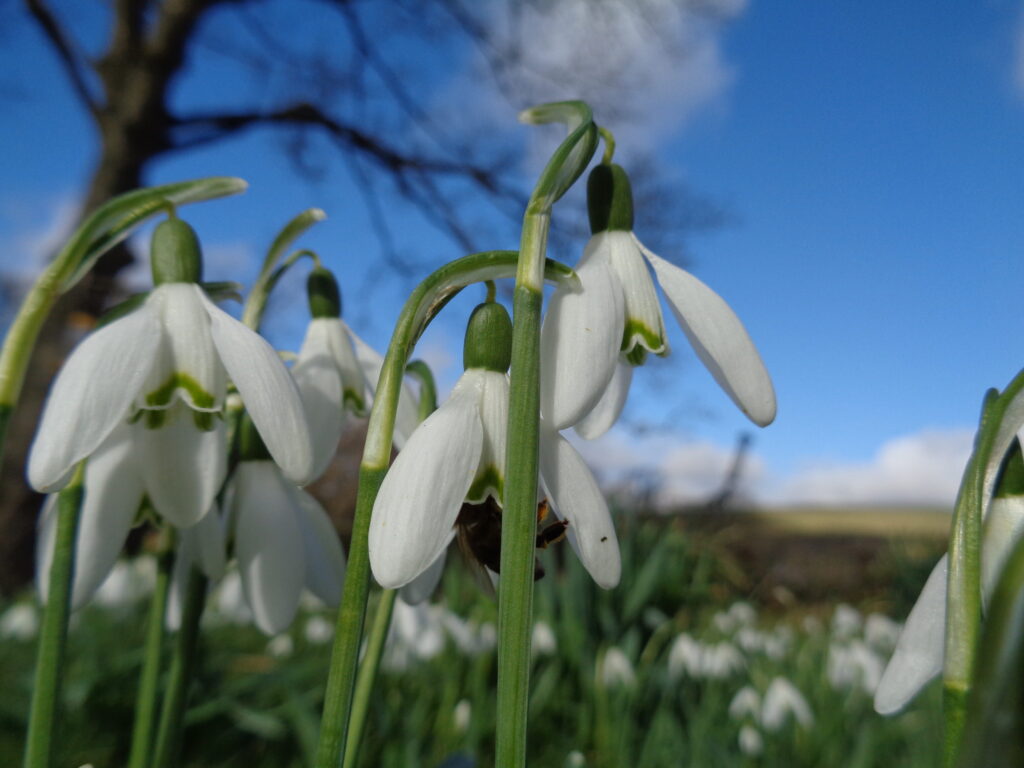
- Wildflowers for February – Wild crocuses provide an excellent and important source of early pollen, particularly for honeybees. Their bulbs should be purchased between September to November for planting in autumn. Other wildflower species will start bringing colour to your garden in February including snowdrops, winter aconites, celandines and primroses.