August should be the month with the warmest weather and your garden will be frenetic with activity. The hot and humid conditions will attract insects like hoverflies and ladybirds, that will keep the greenfly population in check. In dry spells, your pond will attract mammals like hedgehogs to drink. Broods of young birds will be seen exploring their new surroundings, whilst their adult parents will be hidden away undergoing their summer moult.
Watering. Continued spells of hot, dry weather mean it is vital to check the pond level and top up with stored rainwater. If your garden does not have a pond, then keep water bowls and bird baths topped up. Don’t forget that hanging baskets and container-grown plants will all need watering daily, normally in the evening to prevent plants dehydrating.
Taking semi-hardwood cuttings, from shrubs like guilder rose and honeysuckle. A semi-hardwood cutting is taken from the current year’s growth. These will have a woody base, but will be still green and soft at the tip.
Cut the shoot near to the point where it meets the main stem. Snip off the lower leaves and trim the cutting just below the leaf joint. Take off the soft tip just above a leaf joint so that the finished cutting is 5-10cm (2-4”) long. Insert the cutting, one third of its length, into a small pot of seed compost. Water well and cover the pot. The bottom half of a plastic drinks bottle works well as a mini greenhouse. Place the pot in a warm place but out of direct sunlight.
The cuttings should root in two or three weeks. Harden off the cuttings by gradually lifting the polythene to allow more air to circulate over the next three to four weeks. Transfer the cuttings individually into larger pots. Place the pots in a cool greenhouse or cold frame. Keep well-watered. Plant outside in the spring.
Trim native deciduous hedges like hawthorn, beech, field maple or hornbeam. Carefully check no nesting birds will be disturbed. Native hedges do not need trimming every year and should only be cut to retain shape.
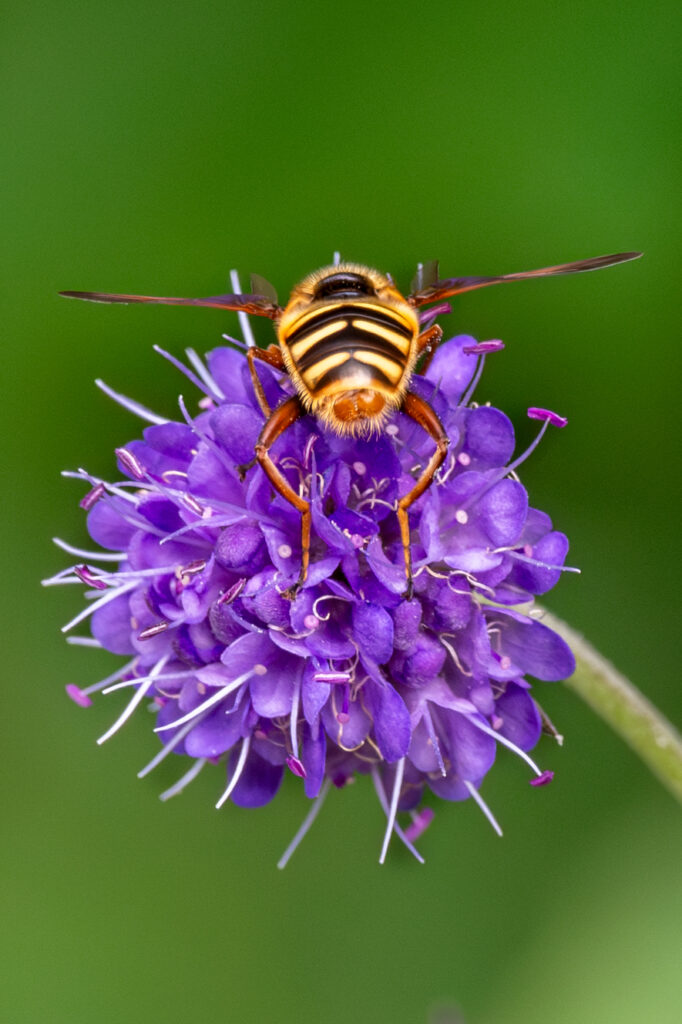
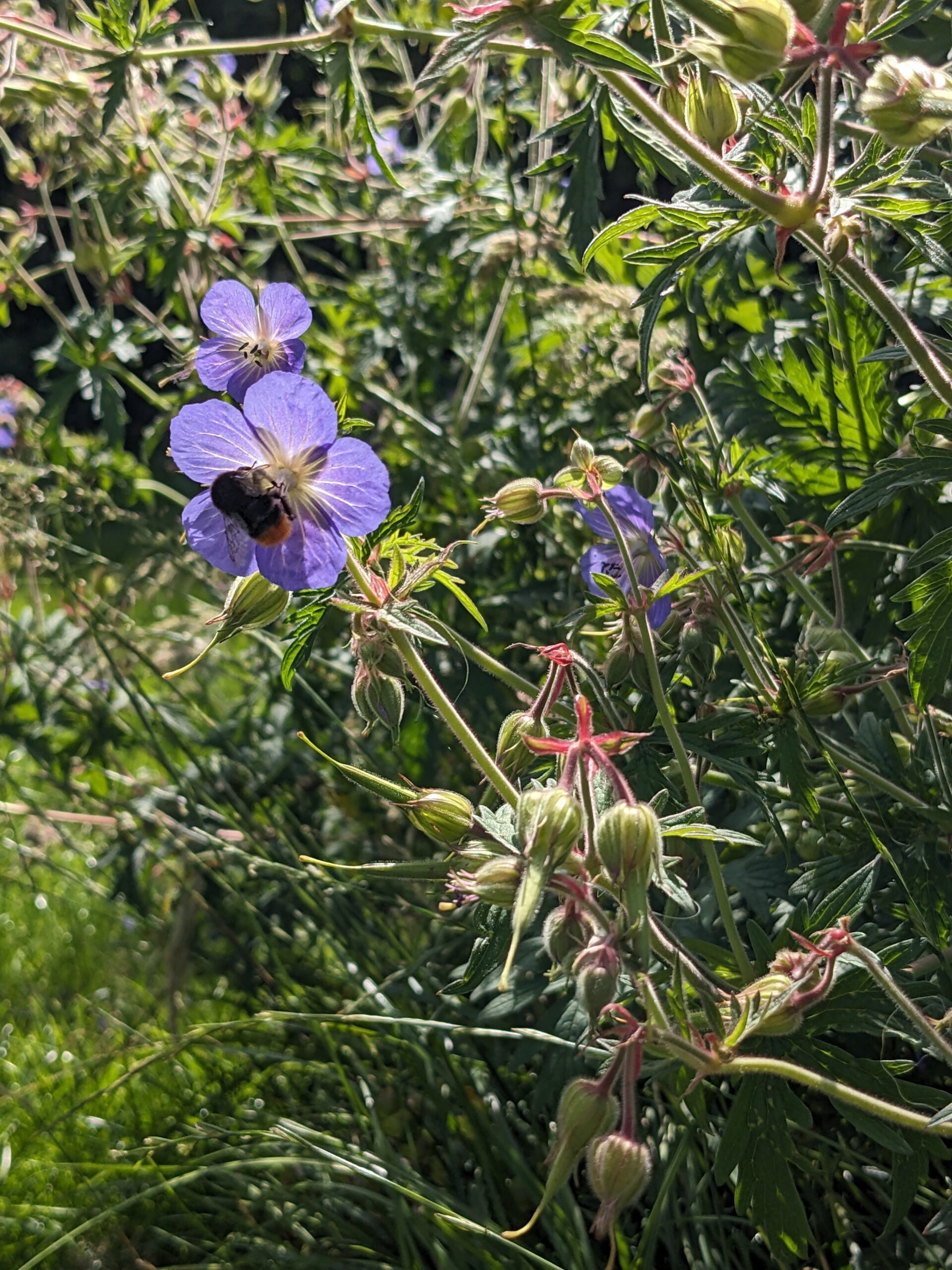
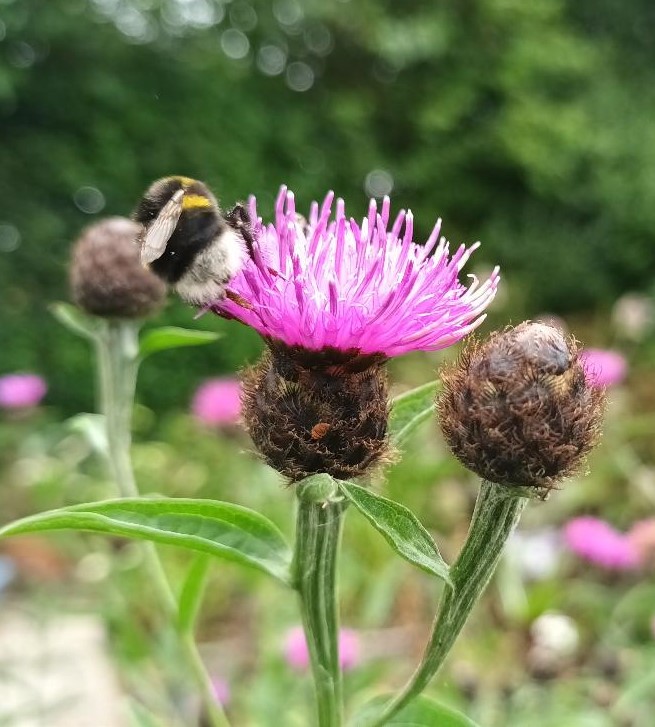
Our wildflower of August is the common knapweed (Centaurea nigra). A common wildflower found on roadsides and hedge banks, it can also make an important, great garden plant. Tall and robust, its bold thistle-like flowers attract a good range of insects. In early autumn the seedheads are eaten by finches. A deep root system will capture large amounts of nitrogen, beneficially putting it back into your garden soil profile at depth. Established plants can be divided in the winter. Other August flowers include the meadow cranesbill and devil’s bit scabious.
For information on these plants and other wildflowers please visit our website at https://beefriendlywildflowers.co.uk/
Many thanks go to Community Pollinator Patches, https://hermitagefieldcommunitymeadow.com/, for their devil’s bit scabious photo