Foxgloves (Digitalis purpurea) are nativebiennials. They flower from June to July and can grow to a height of up to 200cm centimetres. The foxglove is a beautiful plant, with distinctive pinkish-purple bell-shaped flowers on a tall spike stem. You will find 20+ flowers on each stem.
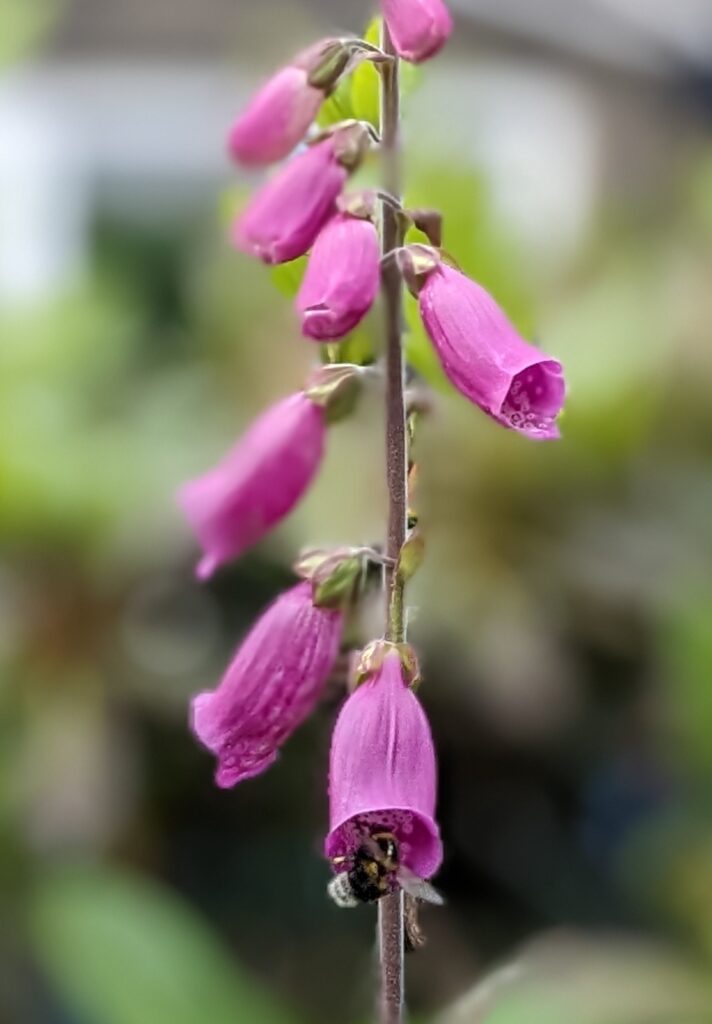
Foxgloves are valuable for wildlife. Long-tongued bees such as the carder bee will spend all day entering the flower tube to access the nectar inside. They are also attractive to other bumblebees and moths
Locally you will find foxgloves in most types of disturbed habitats, waste ground, heathland, deciduous woodland edges and scrub. Foxgloves grow best in well-drained light soils and prefer partial sun.
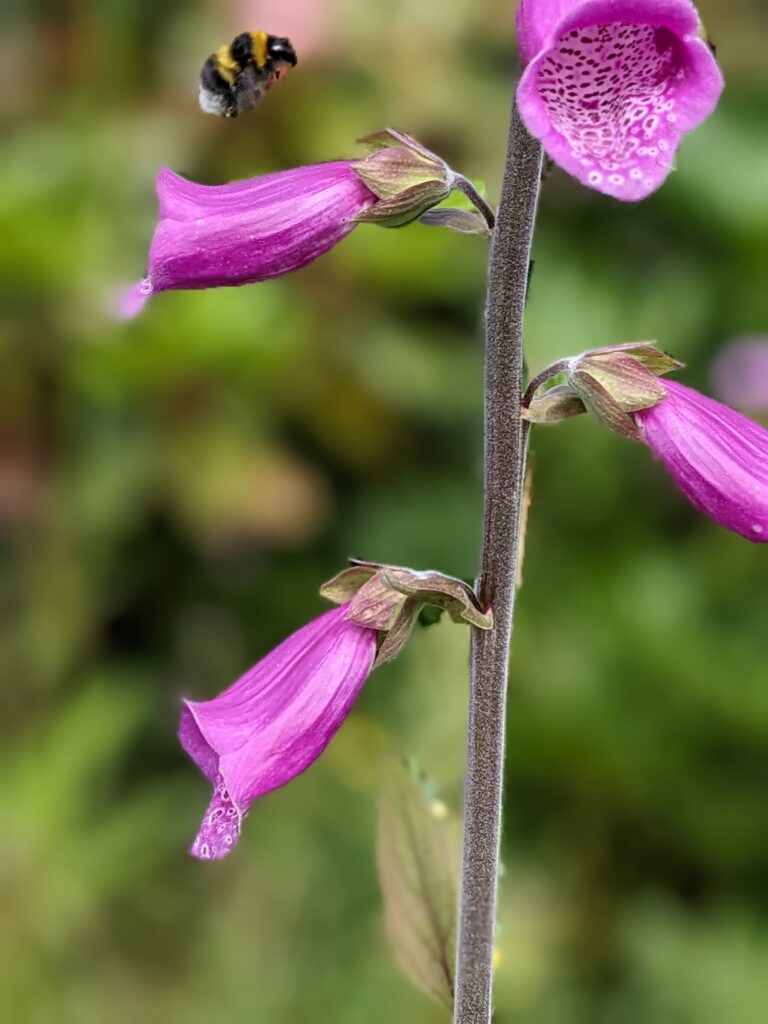
The foxglove is a classic cottage garden flower; the tall flowering stems make them the perfect architectural plant for garden beds and borders. Note that they are poisonous and you need to consider this before planting in young family gardens. Foxgloves will also do well in wild areas, hedgerows and even pots.
Foxgloves propagate by seed. You can spot when the seeds ripen; the seed capsule changes from green to black. In early to mid-summer, snap off the spike stem and shake/sow direct onto moist soil or a seed tray. Seed trays should be kept in the shade until seedlings appear the following spring. As with all biennials, foxgloves spend their first year developing root systems and will flower in the second year.
Interesting facts:
- An old saying about foxgloves is that they can both “raise the dead and kill the living”. They are well known as the original source of the heart medicine digoxin (also called digitalis or digitalin). This is used to treat heart failure and high blood pressure.
- Foxglove derives from the Anglo-Saxon words ‘folk’s’ (meaning ‘little folk’ or ‘fairies’) and ‘gliew’ (meaning ‘a musical instrument with many small bells’)