
Common Hawthorn is an abundant native tree/shrub that grows to a height of 15m. It flowers with creamy-white blossom from late April-June and produces red fruit known as ‘haws’ from September to November. It can be identified by its deeply lobed leaves and spiny twigs. The hawthorn is also commonly known as the ‘May tree’.
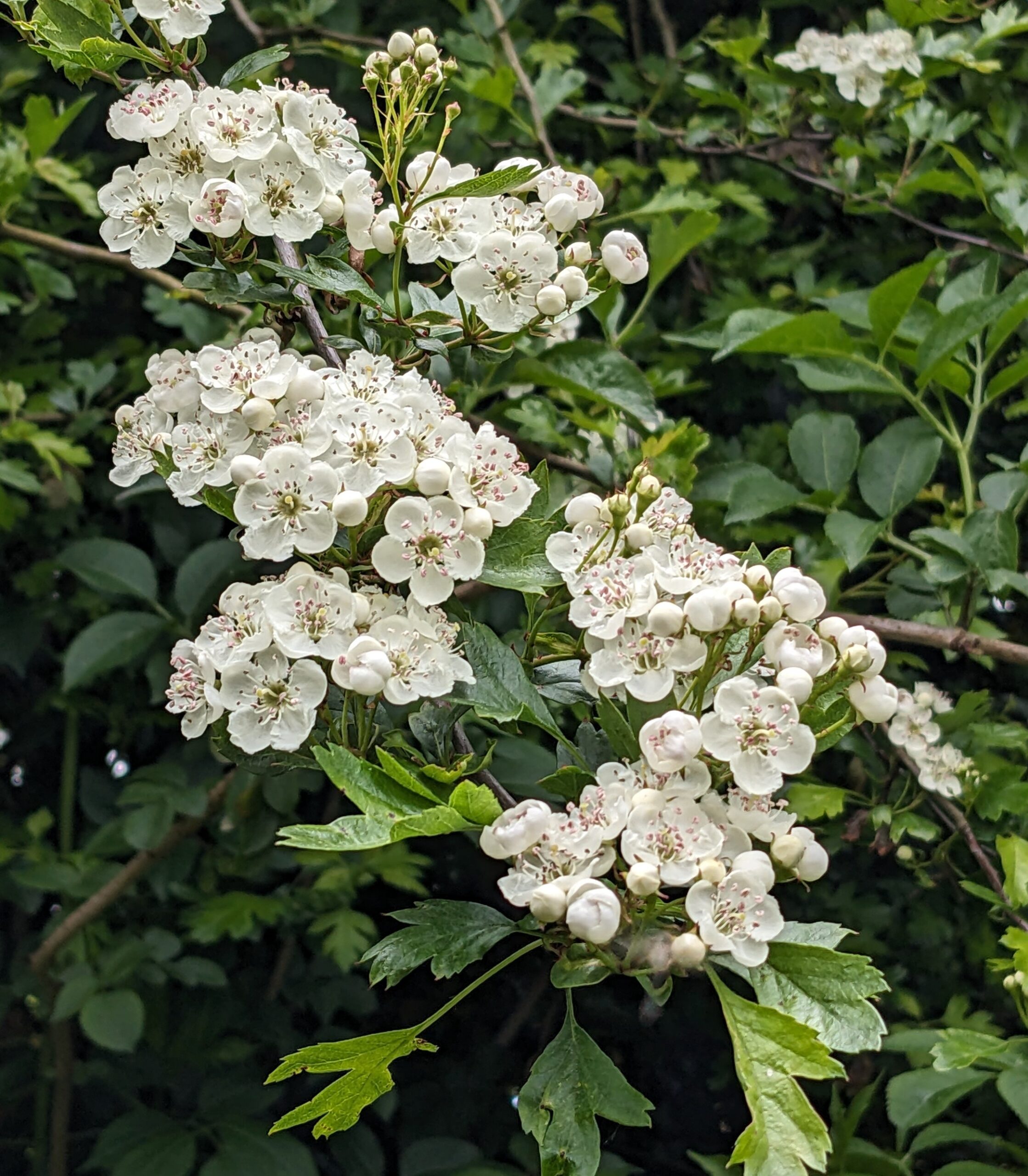
Common Hawthorn is a very important species for all kinds of wildlife. Hawthorn blossoms teem with bugs and the haws are food for the birds. The dense thorns provide protection for nesting birds.
Care needs to be taken when pruning hawthorn; flowers are produced from mature wood so over pruning each year will prevent them, and the resultant fruit, from growing. If pruning must be done, then ensure it is after flowering. Waterlogged soil may also prevent the plant from flowering.
Common Hawthorn thrives in hedgerows, scrub and woodland. It should be planted in moist but well-drained soil in full sun or partial shade.
Common Hawthorn can be easily propagated from seed taken from the ‘haws’ in the autumn. The seeds require cold stratification period of 1 winter, but usually 2, winters.
Interesting facts:
- Over 209 invertebrate species have been recorded living on this species.
- The hawthorn blossom featured in many traditional May-time celebrations such as garlands for May Day.
- There is an old English saying ‘Ne’er cast a clout till May be out’. It is thought this was advice about not discarding clothing (clout) until the hawthorn flower was seen.
- Rural folklore said the destruction of hawthorn would invite peril, and to bring blossoms indoors was to court disaster.