
Common bird’s-foot trefoil (Lotus corniculatus) is an abundant native perennial. They flower from June to September, to a height between 10-50cm and have small sunset coloured flowers; yellow to orange, sometimes with streaks of red, and shaped like slippers.
Locally you’ll find trefoil in most types of short, dry, unimproved grassland habitats, meadows and road verges. It grows on poor soil, preferably well-drained. It can even be found on coastal rocky beaches – it grows in abundance at Hest Bank beach near the train crossing. It benefits neighbouring plants because of its nitrogen-fixing properties. Trefoils prefer full sun.
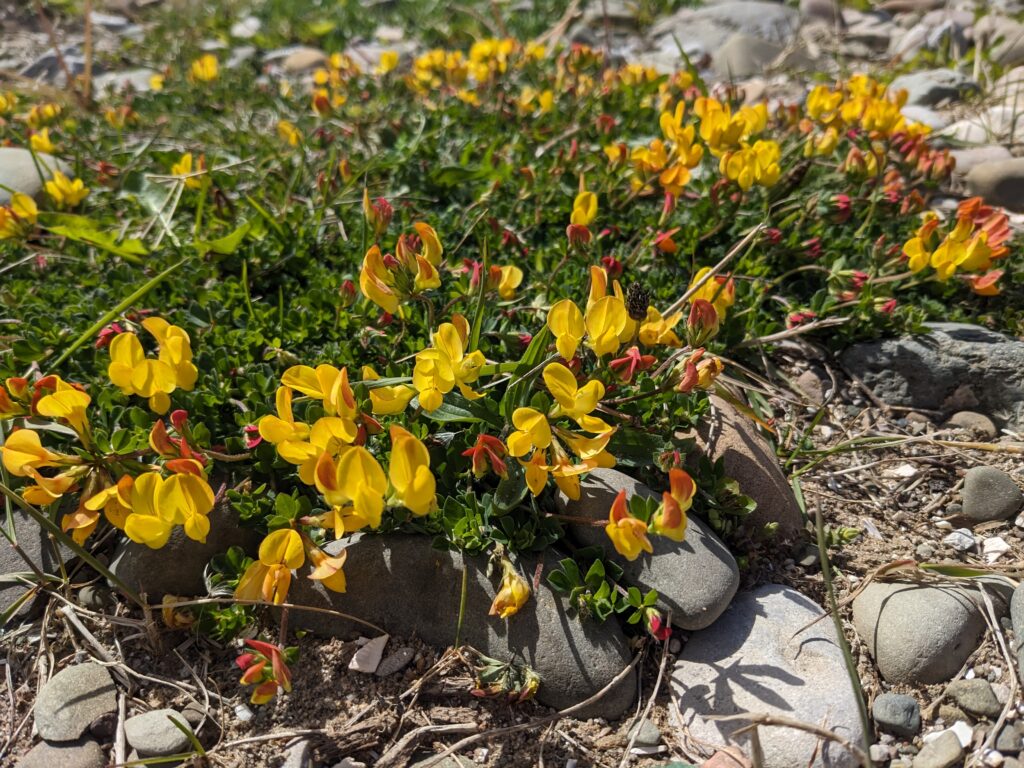
For the garden, trefoils look good in rockeries or herbaceous borders. They also grow well in short flowering lawns, meadows, hanging baskets or pots, where they can provide a beautiful contrast, in colour and shape, to a tall central plant such as viper bugloss.
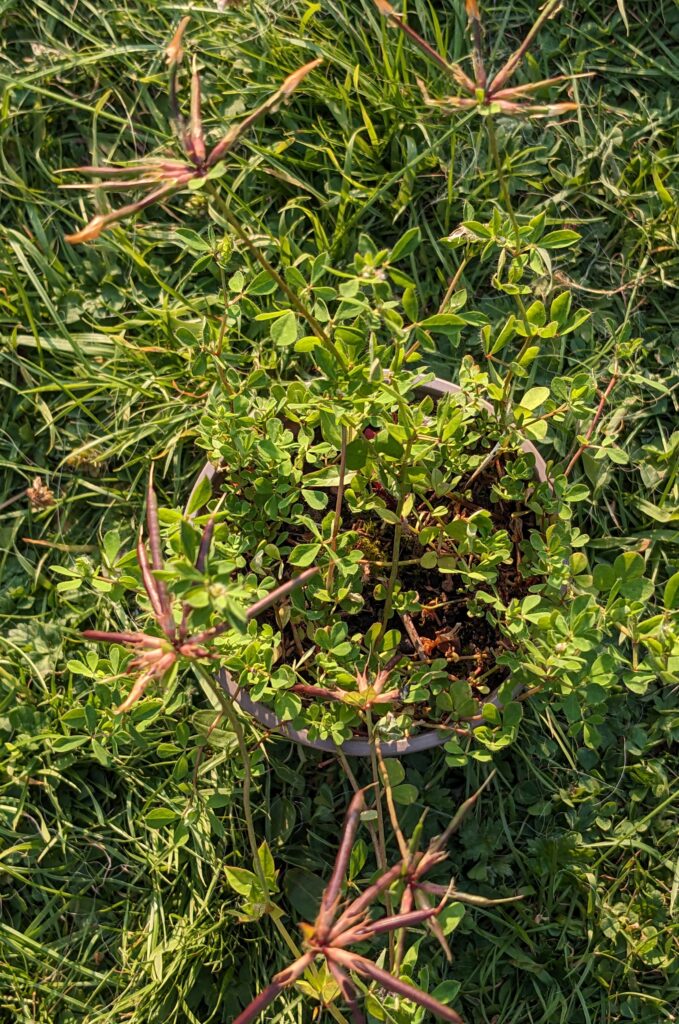
Trefoil propagate easily by seed, collected from the seed pods when they have turned brown. Or, if you have it in a pot, you can separate the plant at its root and repot the split shoots.
Trefoils are valuable for wildlife, providing food for range of larvae, including those of the common blue and clouded yellow, green hairstreak and dingy skipper butterflies. It is also a good nectar source for bees.
Interesting fact:
- Trefoil are commonly known as ‘bacon-and-eggs’, due to their flower petal colours. The claw-like seed pods earn the name Bird’s foot trefoil, or sometimes Granny’s Toenails.
More detail on how you can grow meadowsweet can be found on our Wildflowers for Sale page.