
Borage is a non-native annual and flowers from June to September, to a height of around 60 centimetres. The flower has narrow blue petals and conspicuous blue stamens in the centre. The heads are large and many flowered.
Borage is found on verges and waste ground. As a native of southern Europe, borage likes full sun but will also tolerate light shade. It is ideally suited for informal areas of your garden such as wildlife areas. For allotment holders, borage is also recommended on vegetable patches as a companion plant, diverting pests from tomato or strawberry plants. It can also be grown in containers, hanging baskets and gravel beds.
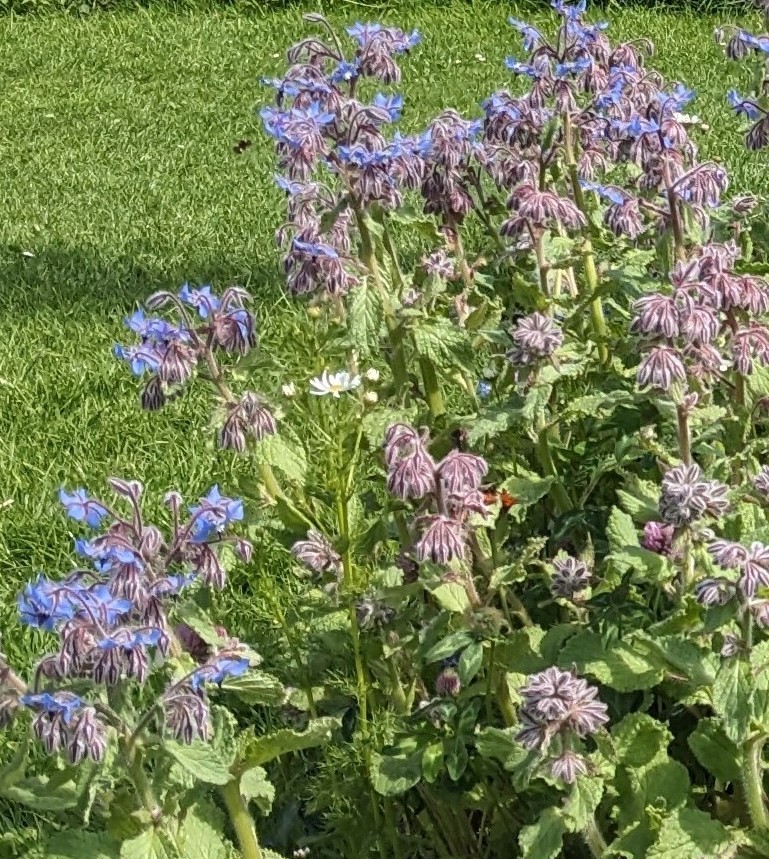
Borage can easily propagate by seed, sown April-May. Seeds should be covered with half an inch of soil/compost. Borage plug plants can also be added later in May-June. Both sown and bought plants should be thinned to 30cm apart to allow room to grow. Once established, borage will come up year after year from self-sown seed.
Borage is one of the most important pollinator-friendly plants and has a high value to wildlife including honeybees and many bumblebee species. The flowers are inverted and so nectar is not easily washed out by rain. More remarkably, after a bee has visited the flower, the borage plant will refill with nectar within 20 minutes. Yes, that’s correct…. 20 minutes, it’s a ‘fast-nectar-fly-thru’.

Interesting facts:
- Borage is much sought after by humans as well as insects, as both flowers and leaves are edible and reminiscent of cucumber. During the Middle Ages, borage was thought to guarantee courage in battle and their open flowers were offered in farewell drinks to departing Crusader knights.
- Later, borage was recommended on old Pimms bottles as an attractive garnish, together with lemon and ice. There are many edible decoration ideas for borage flowers, including freezing the borage flowers in ice cubes.
- Even after borage has flowered and dropped its seeds, the plant is still beneficial. Dying borage plants should be added to compost, where the calcium will be a welcome addition to your compost mix.