Wildflower Gardening Blog (Started May 2026. Work in progress to add backdated articles and filters)
We wanted to help people find out how to develop their wildflower area. This blog has (will have) articles on developing wildflower areas throughout the seasons and on individual plant species to help you chose what is right for you and your area.
We use the word “area” rather than garden or meadow as wildflower gardening does not have to involve acres of land or having to give up your lawn. Our back garden has a wildflower patch that is just 2x2m and is always buzzing with insects despite the rest of the garden being the dog’s domain. If you dont have the space or inclination to create a wildflower patch then a wildflower area can be created using pots which will allow you to enjoy the sights and sounds of nature in a more controlled way.
Common Hawthorn
13th May 2026
Common Hawthorn is an abundant native tree/shrub that grows to a height of 15m. It flowers with creamy-white blossom from late April-June and produces red fruit known as ‘haws’ from September to November. It can be identified by its deeply lobed leaves and spiny twigs. The hawthorn is also commonly known as the ‘May tree’.
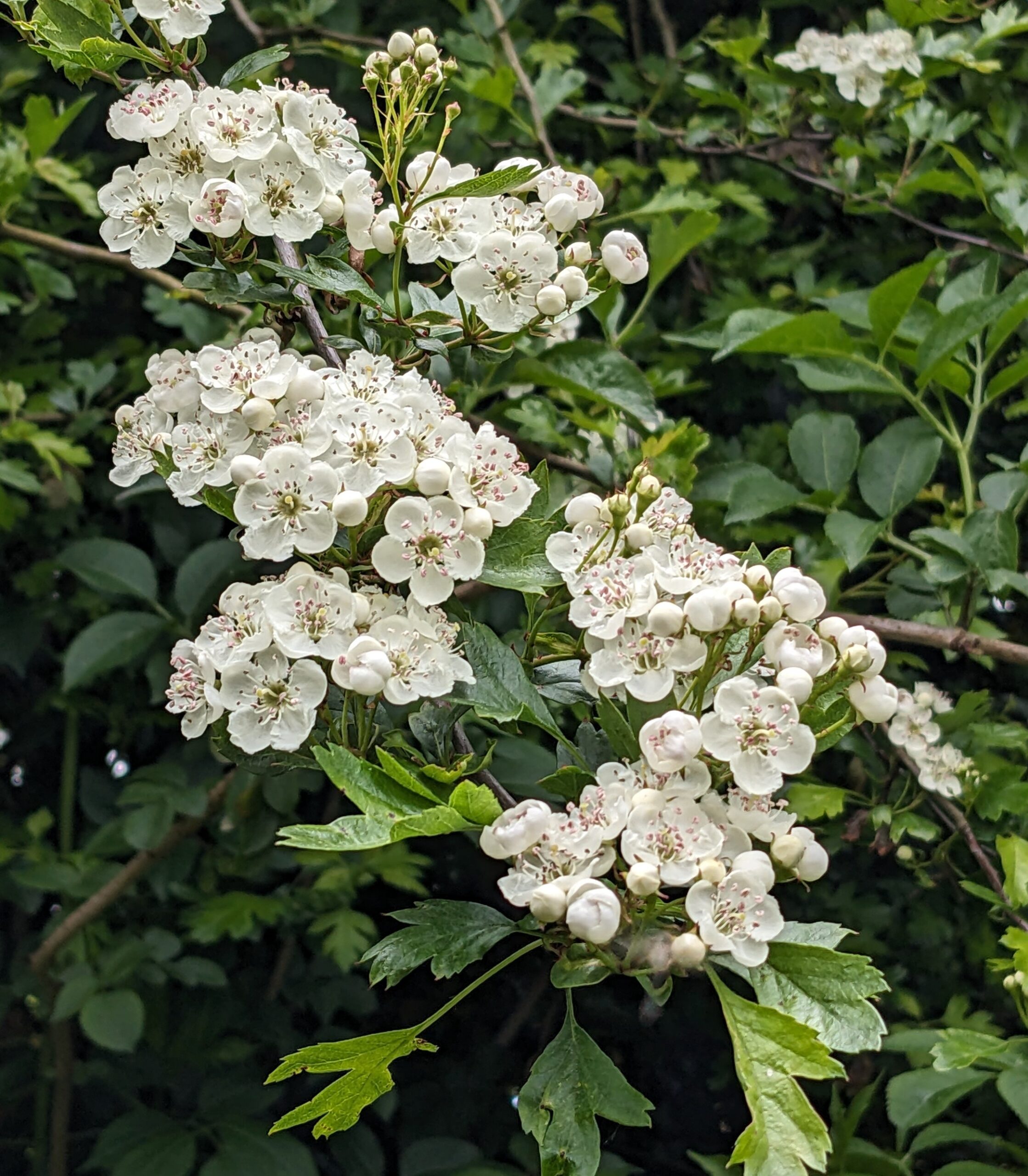
Common Hawthorn is a very important species for all kinds of wildlife. Hawthorn blossoms teem with bugs and the haws are food for the birds. The dense thorns provide protection for nesting birds.
Care needs to be taken when pruning hawthorn; flowers are produced from mature wood so over pruning each year will prevent them, and the resultant fruit, from growing. If pruning must be done, then ensure it is after flowering. Waterlogged soil may also prevent the plant from flowering.
Common Hawthorn thrives in hedgerows, scrub and woodland. It should be planted in moist but well-drained soil in full sun or partial shade.
Common Hawthorn can be easily propagated from seed taken from the ‘haws’ in the autumn. The seeds require cold stratification period of 1 winter, but usually 2, winters.
Interesting facts:
- Over 209 invertebrate species have been recorded living on this species.
- The hawthorn blossom featured in many traditional May-time celebrations such as garlands for May Day.
- There is an old English saying ‘Ne’er cast a clout till May be out’. It is thought this was advice about not discarding clothing (clout) until the hawthorn flower was seen.
- Rural folklore said the destruction of hawthorn would invite peril, and to bring blossoms indoors was to court disaster.
Go Wild in your Garden in May
13th May 2026
May is a busy time in your garden. Birds will be feeding their young whilst bumblebees criss-cross your garden borders, taking advantage of the abundance of wildflowers. If you hear strange noises at night, it is probably the sound of hedgehogs, who are feeding on slugs and finding partners for mating.
‘No Mow May’; This is an annual campaign by the wild plant conservation charity Plantlife. Keep the mower in the shed this month and see what wildflower species lie dormant in your lawn. You don’t have to leave the whole lawn; just a small area will be enough for you to see the difference it makes to plants and insects.
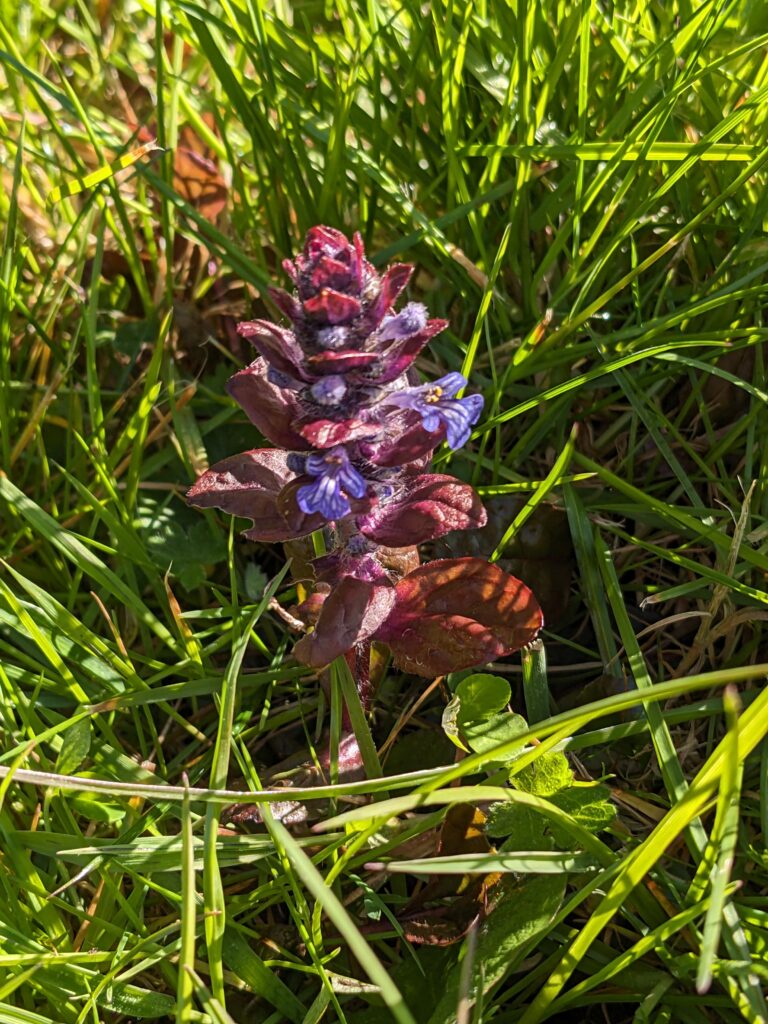
If you want to be involved in your garden:
- Lift and divide wild primroses after flowering has finished. Thin out overcrowded clumps and replant in new areas of garden.
- Prune flowering currant bushes; wait until flowering has finished, then cut out the woody stems near the base of the plant.
- Plant hanging baskets; arrange wildflower plant species so the trailing varieties are at the edge and the upright ones in the centre. To get the most out of your planters throughout the year, crocus and wild daffodils could be added. Remove and store when flowering is over. An alternative is to plant a basket of herbs such as mint and chives and allow them to flower.
- May Wildflowers; in late spring, the hedgerows will be full of wildflowers and managed verges will change from green to a profusion of colour. These include oxeye daisy, red clover, meadow buttercup, bush vetch, red/white campion, cow parsley and the grass species ribwort plantain. Our favourite flowering tree of May is the hawthorn. Common hawthorn will produce masses of creamy-white blossom, colouring the hedgerows and attracting teems of wildlife. Birds will nest there taking advantage of its spiky protection.
- Say no to peat compost. Often referred to as bogs, fens or mires, peatlands have an unparalleled ability to sequester carbon and regulate water cycles where 70% of the UK drinking water comes from. They are also home to a wealth of biodiversity, from breeding curlews to squishy sphagnum mosses. Labels such as ‘organic’, ‘natural’ and ‘environmentally friendly’ do not guarantee peat free compost; ensure it is labelled 100% peat free. Likewise, there is no such thing as ‘Responsibly Produced Peat’ and ‘Peat reduced components’, these still contain peat extracted from peatlands, no matter how much reduced.