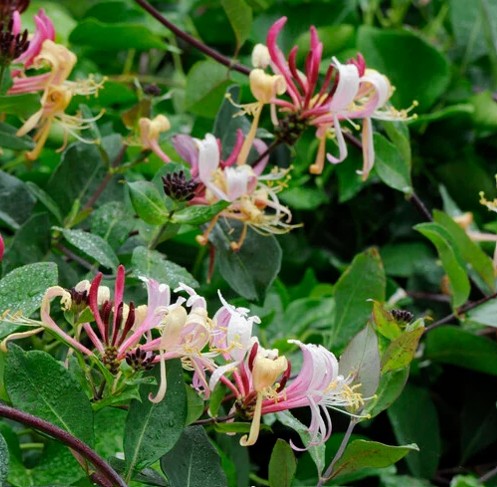
Honeysuckles are fairly common native climbing shrubs that grow vigourously along hedgerows. They produce sweet-scented creamy trumpet-like flowers from June to September resulting in clusters of red berries in the autumn. They will tolerate limestone, clay and sandy soil, preferring semi-shady conditions to get started.
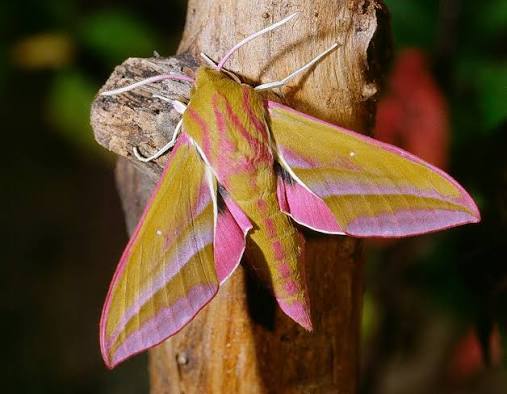
Honeysuckles are hugely valuable to wildlife. Their flowers support several pollinating species including butterflies, bumblebees and moths, including the stunning Elephant Hawk Moth, which is attracted to the sweet scent of honeysuckle at night, when the aroma is strongest.
Hidden in the plant are often dormice, that use the bark of the honeysuckle to build their summer nests and who eat the nectar-rich flowers as a source of energy. Flowers that ripen into berries provide food for birds foraging in the autumn. The fruit are poisonous to humans.
Honeysuckle can be propagated from semi-ripe cuttings (July-August), layering (Spring-Autumn) and through hardwood cuttings (Late Winter).
Interesting facts:
- Honeysuckle flowers, but not the fruit, are edible and recipes can be found for online for teas, jellies, sorbets and spritzers.
- It was once believed that if honeysuckle grew around a home’s entrance, it would bring good luck and stop any evil spirits from entering.
- Also known as woodbine; “Quite over-canopied with luscious woodbine” is part of a poem describing Titania’s, Queen of the Fairies, woodland bed (Shakespeare’s A Midsummer Night’s Dream).