
Melancholy thistles have distinctive flowerheads shaped like shaving brushes which are a vibrant bright purple in colour. Flowerheads are usually solitary, but 2 or 3 may grow in a cluster. Tall and statuesque, they can grow to a height of between 45-120cm. Their leaves have a white underside and are soft and downy to touch and, unique to the thistle family, melancholy thistles stems are absent of prickles.
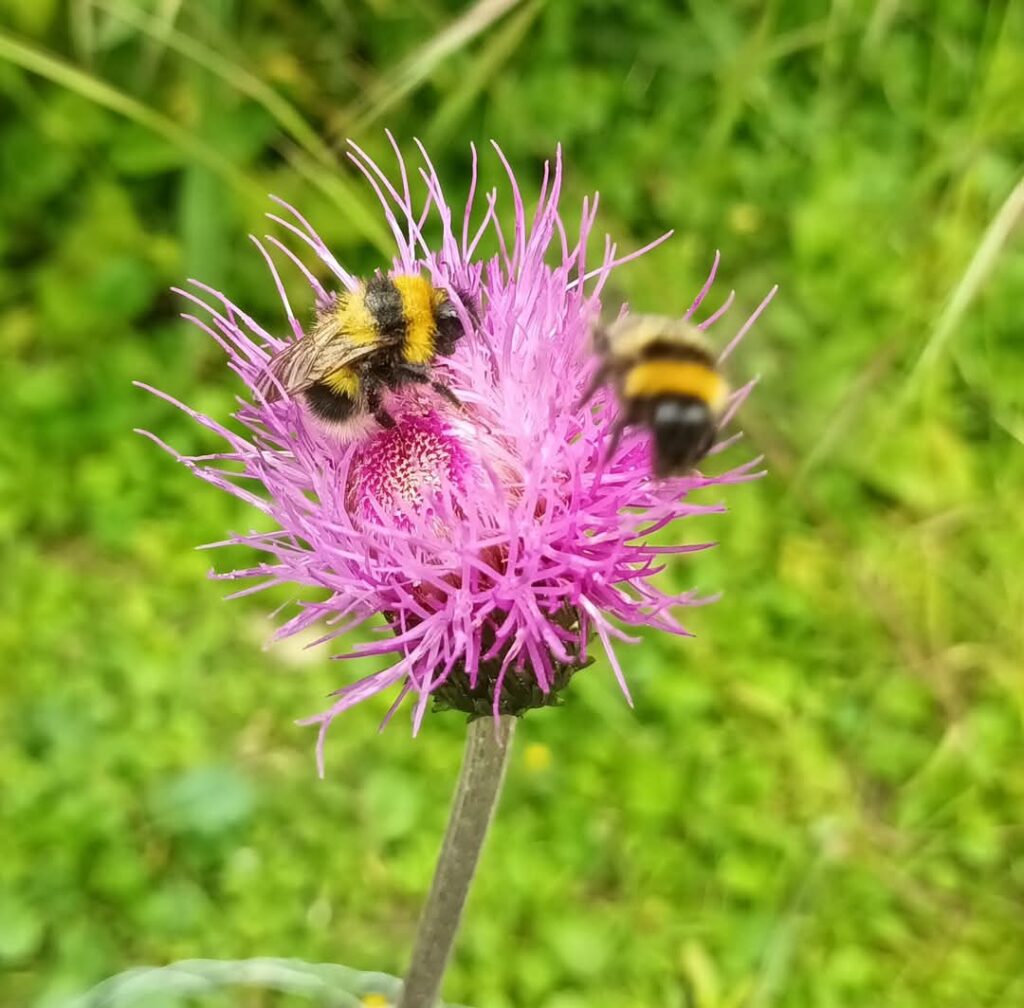
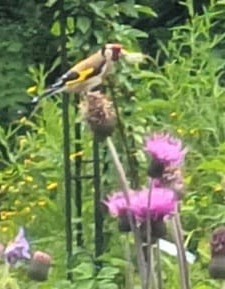
This native perennial has a long flowering period, typically from June to August which makes it incredibly valuable for wildlife. Bees have ample opportunity to dive head-first into the bright purple flowerhead and after flowering, the bulging seed heads attract birds such as goldfinches.
Melancholy thistles grow best in damp but well-drained soil in full sun but can tolerate some dryness and partial shade. An ideal location would be against a drystone wall or similarly light-coloured feature, as the 1m high plants in flower will stand out against lichen and stone backdrop. Walls and/or ponds will stop them spreading by division.
Roadside verges used to be a refuge for melancholy thistles, but intensive cutting regimes stopped them from establishing themselves as cutting was often done before the late seed setting of the thistles.
As with other upland meadow wildflower species, populations have declined with land use change. The main reason for decline is the shift from traditional low intensity hay meadow management to more intensive silage making. In 2014 Melancholy thistles were listed as “Near Threatened” in Natural England’s Red List Index. Concerted efforts by local conservation groups to establish new populations of melancholy thistles and council trials in reducing verge cutting have increased numbers and resulted in them being removed from the Red List Index and since 2021 they have been classified as “Least Concern” and can be found on unimproved upland habitats including verges, meadows, woodland edges and water course banks. To date we at Bee Friendly Wildflowers have donated over 800 thistle plugs to various projects in the north of England.
Interesting Facts:
- Not officially recorded until the 16th century, after the French nature writer Charles del’Ecluse had been told of it’s ‘discovery’ in Ingleborough, North Yorkshire.
- The ‘Melancholy’ name is thought to derive from its historical use as a potion to prevent ‘melancholia’ – a form of depression. Nicholas Culpeper’s Complete Herbal, printed in 1653 stated: “the decoction of the thistle in wine being drank, expels superfluous melancholy out of the body, and makes a man as merry as a cricket”.
More detail on how you can grow meadowsweet can be found on our Wildflowers for Sale page.