March is the month is where you will see more activity in the garden as many species begin their breeding cycle and the weather begins to warm
If you want to be involved in your garden:
- Reduce feeding birds as nesting begins. Hard bread and peanuts are harmful to newly hatched birds, so put out soft food supplies. Reducing food amounts will encourage adults to feed on emerging insects instead. Keep feeding in bad weather.
- Making a pond or water feature is the single most useful thing you can do for your garden wildlife. You need to consider where to site the pond, which construction materials to use and consider linking a marsh or wetland area next to the pond.
- Divide marginal pond and wetland plants in established ponds. Plants will outgrow their space in the pond’s shallow margins. If your pond has no amphibians, you can ‘import’ frog or toad spawn from other ponds.
- Clip heather and lavender to make way for new growth. Use shears to trim off dead flower heads and straggly dry stems. Leave the woody parts. Both species are a valuable food source and protection for bees and other insects.
- Cut new wildflower lawns or meadows sown the previous autumn when the grass reaches 10cm/4’’ high. Leave lawn cuttings for a day, then rake off and add to the compost heap. Only action on lawns with perennial flowers. Lawns sown with annual flowers should be left to cut in late summer. Wildflower seeds which are best sown in spring, can be sown now.
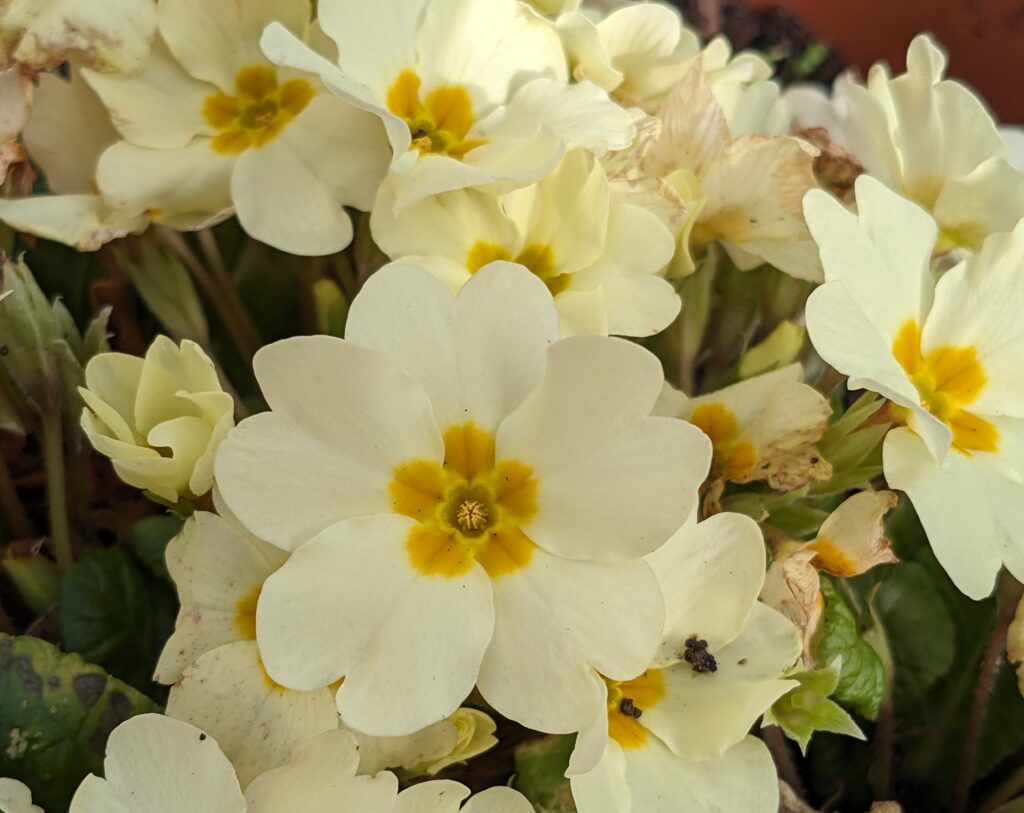
- March Wildflowers –Winter aconites and snowdrop displays will finish. Primroses will continue to flower and wild daffodil, dandelion, coltsfoot, common daisy, red/white deadnettle, flowering currant and cuckoo flower will all make an appearance. Our wildflower of March has to be Lungwort which is a fantastic bee magnet, slug resistant and ideal for moist fertile soil in sun or shade.