Devil’s-bit scabious is a native perennial and flowers from July to November, to a height of 100cm. The flowers are pincushion-like, lilac-blue flower heads on long slender stems. It has rough hairy toothed stem leaves.
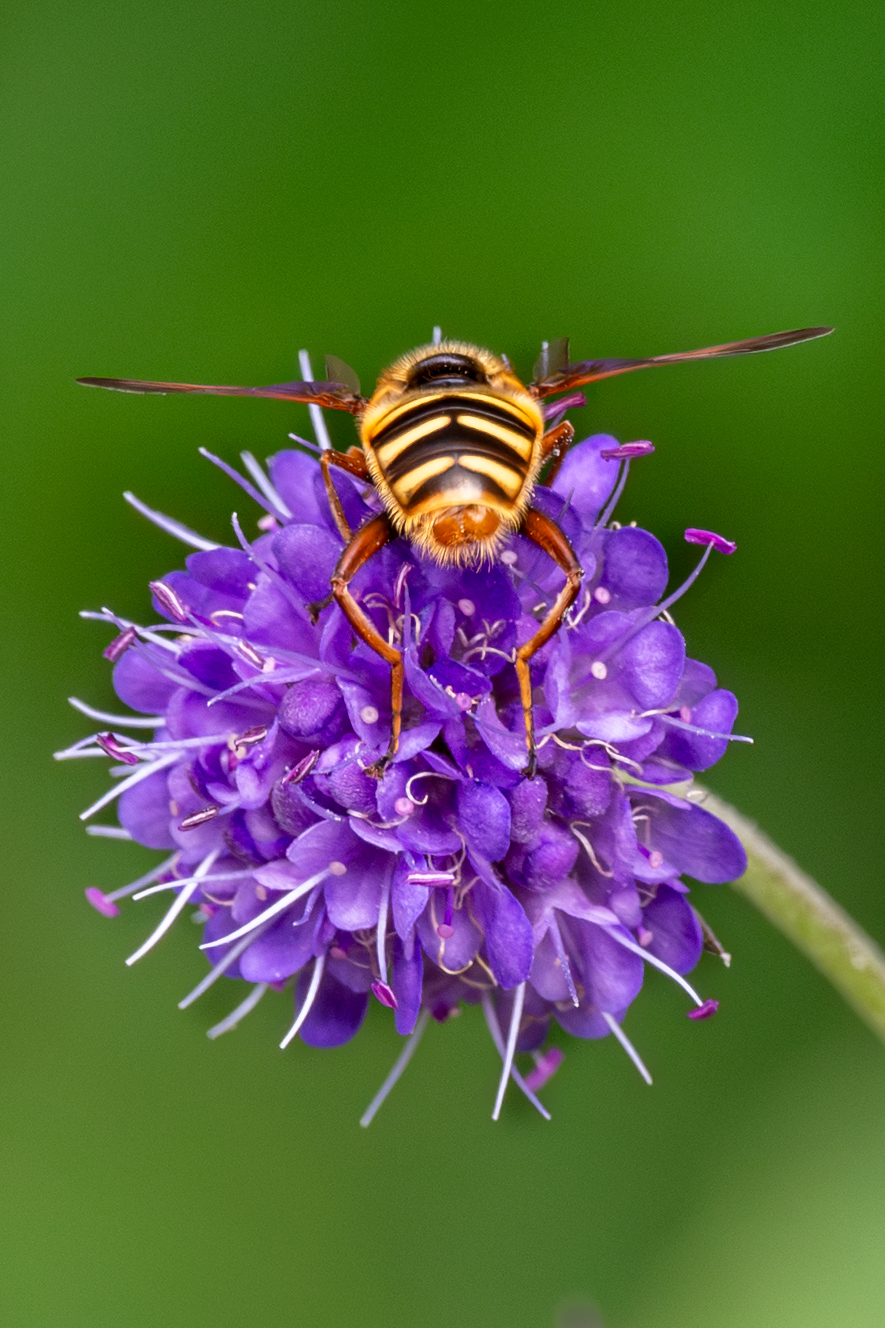
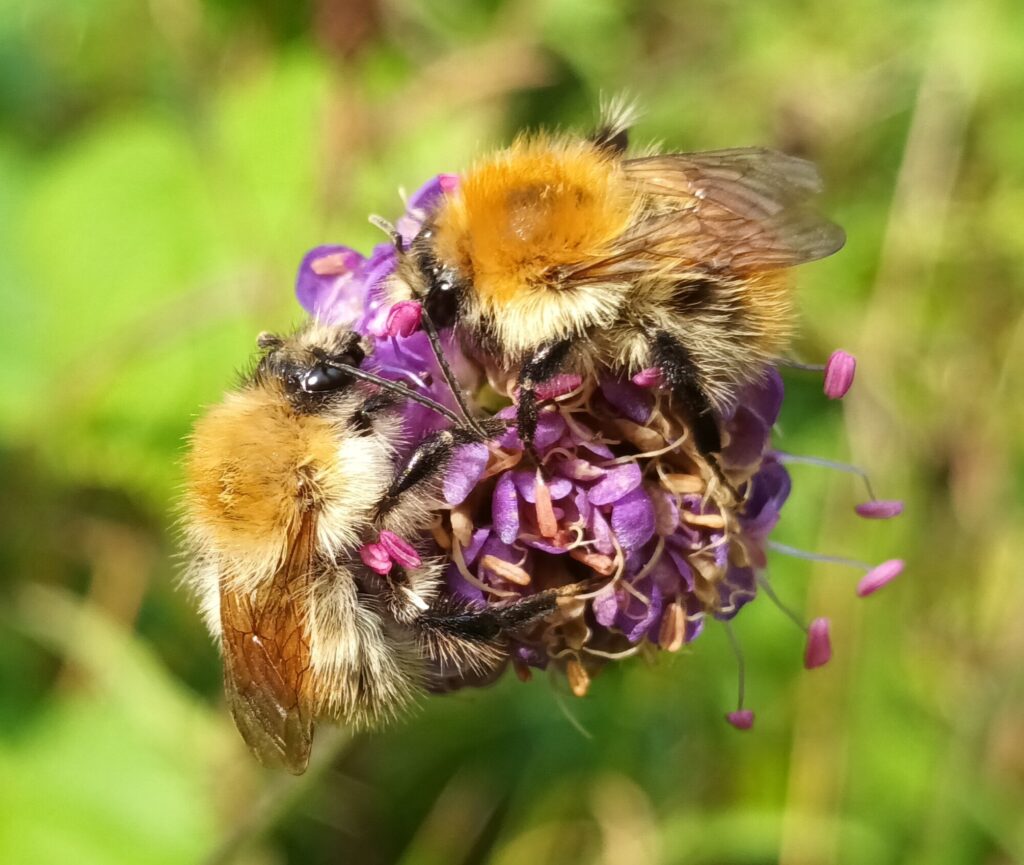
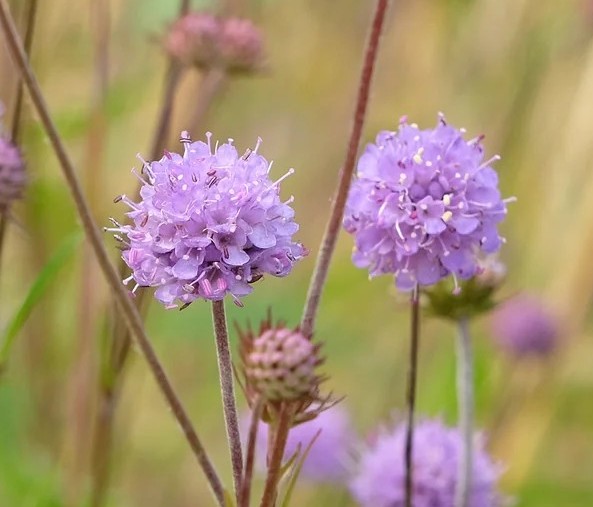
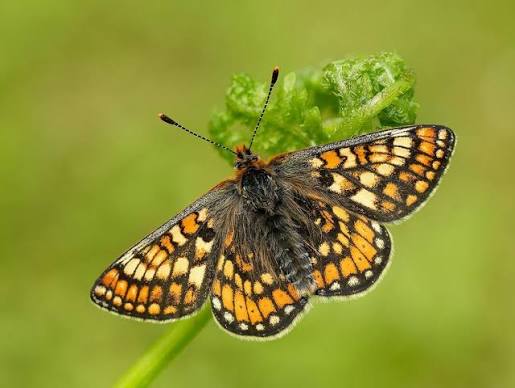
Devil’s-bit scabious offers both nectar and pollen during the late summer and autumn helping support pollinators as they prepare for winter by providing a valuable food source when others are scarce. It is also the sole larval foodplant for the declining Marsh Fritillary butterfly.
Devil’s-bit scabious can be found in a variety of habitats from rough grassy heaths and fens, to damp woodland rides. Tolerant of ordinary soil, this plant thrives more on slightly acidic soil and can tolerate sun and part shade. It is ideally suited in your garden’s herbaceous borders, or can be naturalised in your damp meadow area.
Devil’s-bit scabious can propagate easily by seed and basal cuttings. Note that the plants do not flower until they are four years old.
Interesting facts:
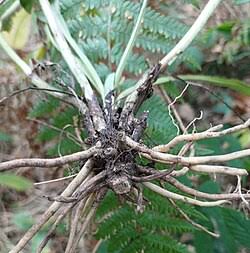
- The common name derives from the story of the devil being furious at the success of this plant curing all sets of human ailments. The devil preferred us humans to suffer and so bit away part of the root, hoping to put an end to its good work. The devil left the plant with the abruptly shortened root we see today.
- “Scabious” comes from the Latin word scabere, meaning “to scratch,” referring to the plant’s historical use to treat skin problems like scabies and leprosy. It was also used to treat fevers, coughs, worms and even as an antidote to the bites of venomous beasts.
- The Latin biological name literally means cut off below of the meadow ie a plant of the meadow that has had its root truncated.